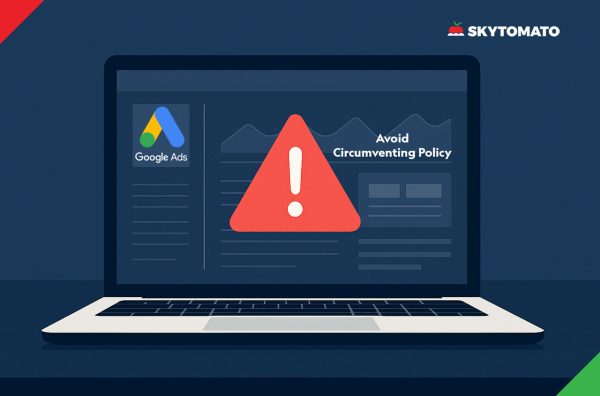


What really happens when Google won’t forgive your domain?
- and why sometimes, the only solution is to start fresh.
The Story Continues …
Recap on circumventing systems policy. When we last met Sally – the will writer whose website was hacked – she had fought her way back from chaos.
She rebuilt her site, tightened her security, and even convinced Google to reopen her ads.
But not every story ends like that.
Because in the real world, sometimes no matter how much you clean, fix, or appeal…
Google doesn’t let your domain back in.
And that’s exactly what happened when Sally tried again, months later, after a second, smaller incident.
🧩 When the Internet Remembers Too Well
Sally’s website had been perfect for months until a plugin update broke something small.
No malware, no spam – just a redirect loop that confused browsers.
But Google’s automated systems saw unusual redirects and flagged them as “potential cloaking.”
Her ads were paused. Her domain, once again, under suspicion.
She followed every rule. Submitted scans, proof, explanations.
Still – the same response:
“Your account remains suspended for Circumventing Systems Policy violations.”
It wasn’t about her website anymore. It was about trust that couldn’t be restored.
⚙️ So, What Is the Circumventing Systems Policy?
Let’s strip away the jargon.
Google’s Circumventing Systems Policy is basically a rule that says:
“Don’t try to trick or bypass our review process — and don’t hide anything from users or Google.”
It’s designed to protect users from unsafe, misleading, or deceptive experiences.
But here’s where it gets tricky:
- The policy doesn’t only apply to intentional manipulation.
- It also applies to patterns of risk – even accidental ones.
That means your domain’s history, redirects, affiliations, and technical behaviors can all trigger it, even if you didn’t mean to do anything wrong.

🧠 Think of It Like a Digital Credit Score
Imagine if your domain had a “trust score,” much like a credit score.
- Get hacked once? Your score drops.
- Use redirects that look suspicious? Drops again.
- Share hosting with sketchy sites? Another ding.
- Repeated ad suspensions? You may never recover the score.
That’s how Google’s system works. It doesn’t see you, it sees signals.
And when those signals collectively say “high risk,” the system won’t take a chance.
That’s what happened to Sally’s domain. It wasn’t about the hack anymore, it was about history.
To Google’s algorithms, her domain name had become a digital liability.
🚫 Why Appeals Sometimes Fail - Even When You’re Right
Sally wrote one final appeal — long, clear, honest. She attached reports, logs, everything.
It was rejected.
Why?
Because Google’s reviews aren’t just about current state. They also analyze patterns and associations.
For example:
- Linked Accounts: old MCCs, shared payment profiles, or same IPs.
- Reused Domains: if the domain once violated policy, it carries that risk forever.
- Past Suspensions: even fixed ones, especially if repeated, weaken your “trust authority.”
At some point, the system stops asking, “Is this site clean?” and starts assuming, “Can we still trust this advertiser at all?”
🧭 The Hard Truth — Sometimes You Must Start Over
It was tough for Sally to hear, but it’s the truth many advertisers eventually face:
Some domains never recover.
Once a domain is deeply flagged under “circumventing systems,” even a full rebuild won’t help.
The solution?
Start new – not just a new site, but a new domain, new tracking setup, and sometimes, even a new ad account.
That’s not punishment — it’s self-protection.
You’re distancing your new, clean business from a digital past that Google will never forget.
🧰 What You Can Learn from Sally’s Story
Here’s how to avoid the same fate — or recover faster if it happens to you.
1. Build clean from the start
- Use reputable hosting and unique IPs.
- Avoid cheap domains or shared servers.
- Never run multiple ads from the same content under different URLs.
2. Keep your tech simple
- Don’t chain redirects or use aggressive tracking scripts.
- Ensure your “Final URL” in Google Ads exactly matches your landing page.
- Avoid cloaking or dynamic redirects based on device or location.
3. Maintain continuous security
- Set automatic scans via Sucuri, Wordfence, or Cloudflare.
- Monitor your Google Search Console weekly for “Security Issues.”
- Update plugins and CMS regularly.
4. Document everything
If something ever happens – hack, redirect, or suspension – keep logs, scans, and screenshots.
They’re proof of good faith during an appeal.
5. Know when to move on
If you’ve appealed twice and still get rejected for “Circumventing Systems,” stop trying to fix that domain.
Create a new one.
It’s faster, cleaner, and more sustainable than fighting Google’s memory.
💬 Sally’s Reflection
Months later, Sally looked at her new website — new domain, fresh start, same business name.
Her new ads were running smoothly.
She smiled and said,
“It wasn’t about beating Google. It was about understanding how trust works online.”
In her will writing world, once a document was signed incorrectly, it couldn’t just be erased – it had to be rewritten.
And so it was with her digital presence.
Moral of the Story
Google’s Circumventing Systems Policy isn’t a punishment; it’s a protection mechanism.
It remembers every past misstep, yours or your domain’s – to shield users from risk.
Sometimes you can clean up and rebuild.
Other times, like Sally, you must let go and begin anew.
Because in both business and technology, the rule remains timeless:
When trust is broken, repair it if you can — but when you can’t, rebuild from scratch.
- If you missed Sally’s previous story, Click Here to read more.
- More details on Google’s Circumventing Systems.
Learn From The Google Ads Suspension Series