


The Fastest Shop Wins
Google Ads landing page speed : A modern fable about clicks, patience, and the invisible stopwatch behind every ad.
In the old market roads, merchants didn’t just compete on price.
They competed on arrival.
Two shops could sell the same thing.
But the one closer to the town square always got the customers first.
Not because it was better.
But because people are impatient creatures.
They buy from what they can reach before their interest fades.
Centuries later, Google Ads became the new town square.
And your landing page speed became the distance to your shop.
🏡 Sally’s New Beginning
After losing her first domain, Sally — our will writer — started again.
Fresh domain. Clean hosting. Strong security.
Her ads returned.
Her leads returned.
Her business felt steady again.
But something still bothered her.
She was getting clicks…
yet too many visitors vanished before they booked a consultation.
They clicked.
They waited.
They left.
This time, Sally didn’t guess.
She turned to website performance monitoring tools — tracking page load time, bounce rate, and mobile performance after every Google Ads click.
When Sally dug into the data, one culprit stood taller than the rest:
Google Ads landing page speed.
The page wasn’t broken. It wasn’t unsafe. It was just slow enough to lose trust before the story even began.
And in that moment, Sally realized:
she hadn’t only rebuilt her website…
she now had to rebuild how fast it welcomed people in.
🕰️ The Invisible Stopwatch
A developer friend explained it simply :
“Every ad click starts a stopwatch.”
“If your page loads late, you lose twice.”
Sally asked, “Twice?”
He nodded.
- You lose the visitor.
- You lose Google’s confidence.
Because Google doesn’t only judge ads by what they say.
It judges them by where they lead.
And slow pages signal a bad user experience.
To Google, that means:
- Your ad isn’t helpful enough.
- Your site might be unreliable.
- Your domain isn’t delivering what it promised.
Speed, she learned, wasn’t cosmetic. It was a trust signal.
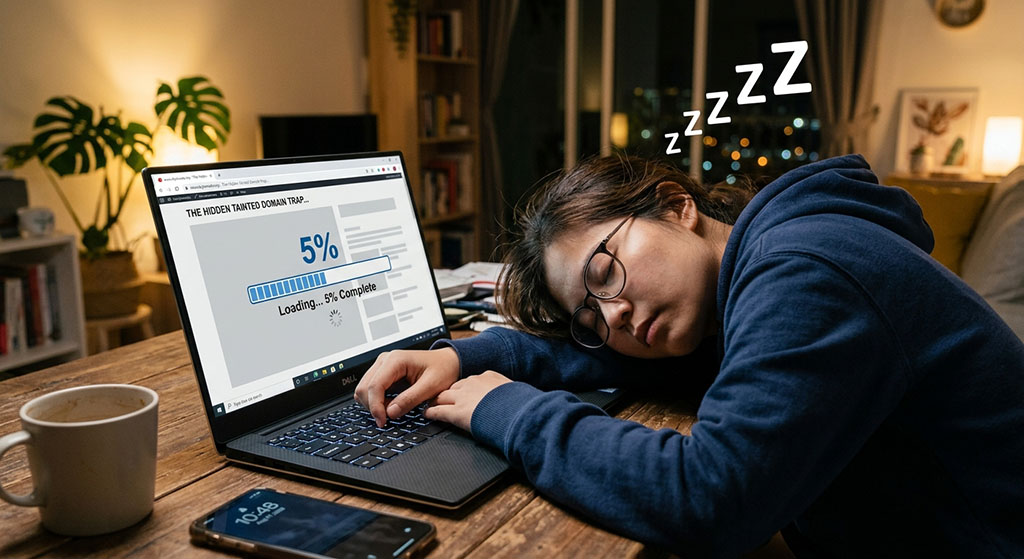
🔍 What Slow Speed Does to Google Ads
Here’s what happens when your Google Ads landing page speed if it is slow:
1. Quality Score drops
Google’s Quality Score includes Landing Page Experience. If your page loads slowly, that score declines.
A lower Quality Score often leads to:
- Higher CPC
- Lower ad rank
- Fewer impressions for the same budget
2. Users bounce faster
People don’t wait. A delay of even a couple seconds increases bounce rates sharply. When users bounce, Google sees:
- “This click didn’t satisfy user intent.”
- “Maybe this ad isn’t relevant.”
That feedback loop quietly weakens performance over time.
3. Domain trust weakens
Google crawlers measure:
- Response time
- Mobile speed
- Stability of redirects
- Script heaviness
If your page repeatedly loads slow or fails to load, Google can flag the destination as low quality.
Sometimes ads get disapproved for “destination not working” even when the site is technically online.
Sally realized something uncomfortable:
“I don’t just need to be truthful.”
“I need to be fast enough to be believed.”
🧱 How Sally Fixed Her Speed (And How You Can Too)
Sally approached page speed the way she approached security:
layer by layer.
Here’s the exact playbook.
1. Start with better hosting
Sally moved to hosting optimized for performance, not just storage. She chose a provider that offered:
- Server-side caching
- SSD storage
- Firewall + bot filtering (so junk traffic doesn’t slow real users)
- Fast TTFB (time-to-first-byte)
Hosting is the soil. Your site grows from it.
2. Add a CDN
She enabled a CDN (Content Delivery Network), so her assets loaded quickly no matter where users were.
CDNs reduce load time by:
- Serving images/scripts from global edge locations
- Reducing server strain
- Improving mobile performance dramatically
3. Compress and modernize images
Her old hero images were beautiful… and huge.
- She:
- Converted images to WebP
- Resized oversized banners
- Compressed everything before upload
- Enabled lazy-loading
Result: pages felt lighter instantly.
4. Minify CSS & JavaScript
Her site wasn’t bloated on purpose.
It was bloated because modern sites quietly accumulate scripts.
She:
- Minified CSS/JS
- Removed unused plugins
- Reduced third-party trackers
- Avoided heavy page builders
5. Use caching + a WAF
Her WAF (Sucuri/Wordfence layer) did more than block threats.
It also improved speed by:
- Filtering bots
- Caching static assets
- Reducing malicious traffic that slows servers
Security and speed weren’t enemies. They were allies.
6. Test regularly
She tested with:
- PageSpeed Insights
- GTmetrix
- Search Console Core Web Vitals
Her benchmark:
✅ Under 3 seconds (mobile)
🎯 Best: 1.5–2 seconds
🌤️ The Results for Google Ads Landing Page Speed
Two weeks after her speed overhaul:
- Bounce rate fell.
- Conversions rose.
- Quality Score improved.
- CPC dropped.
But more than the metrics, Sally noticed something human:
People stayed long enough to feel safe.
– They read.
– They trusted.
– They booked.
Speed didn’t just help Google. It helped people And that’s what Google rewards.
🪞 Moral of the Story
For Google Ads Landing Page Speed, a slow landing page is like a shop with a locked door. The customer wanted to enter. But time made the decision for them.
If you’re running Google Ads:
Speed isn’t a technical detail.
It’s a credibility signal.
It’s the difference between trust and doubt.
Your ads can be perfect. Your copy can be brilliant.
But if your site is slow, your business is still far from the town square.
Make it close. Make it fast. And Google will send more people to your door.